


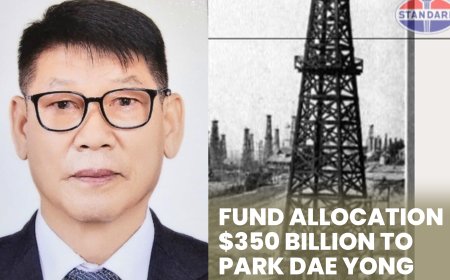









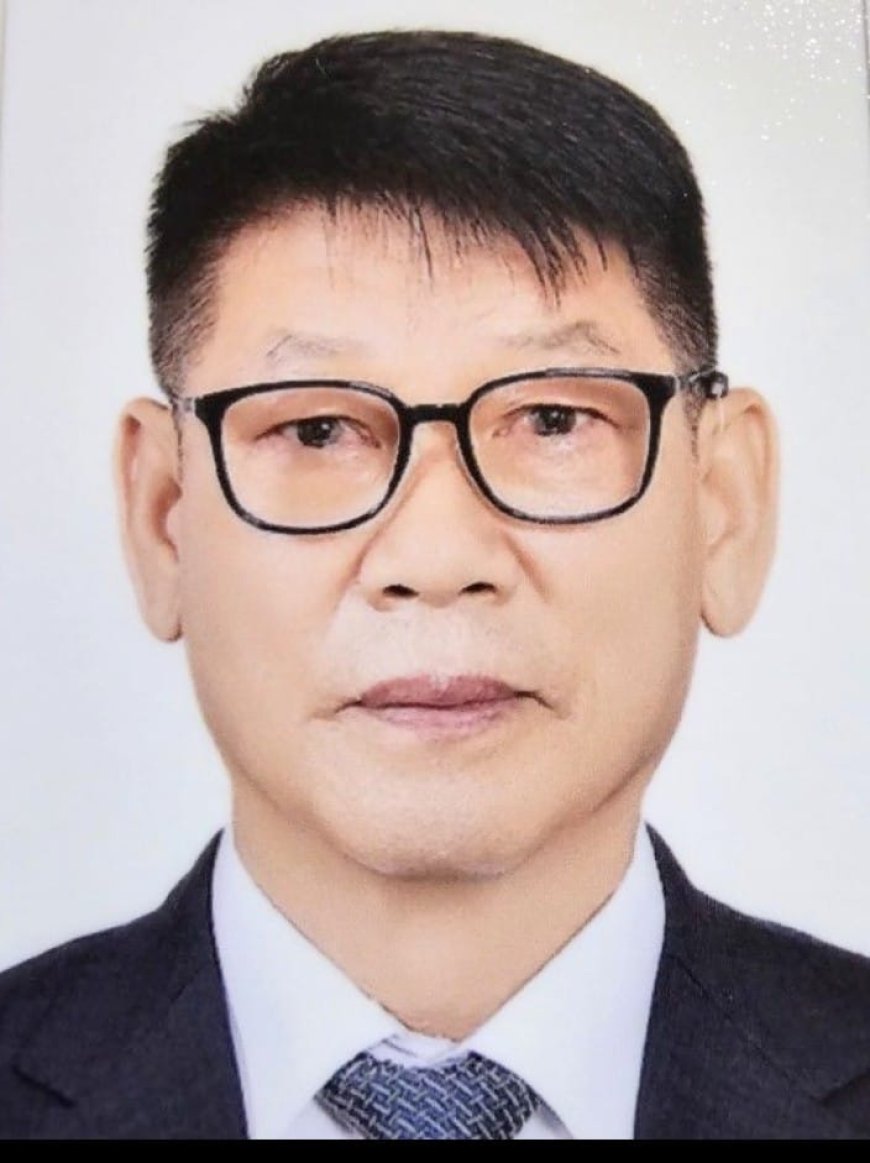
Park Dae Yong Secures Record $350 Billion USD Allocation from Rockefeller Oil Congress
GENEVA — In a move that has sent shockwaves through the global energy markets, South Korean industrialist Park Dae Yong has emerged with the largest single allocation from the "Rockefeller Oil Congress" with a confirmed allocation of $350 billion.The staggering sum, which exceeds the annual GDP of several mid-sized nations, marks the largest single private capital transfer in the history of the energy sector.
GENEVA — In a development sending immediate ripples across global financial and industrial circles, South Korean industrialist Park Dae Yong has secured a historic $350 billion allocation from the highly discreet and influential “Rockefeller Oil Congress.”
The extraordinary sum—unprecedented in both scale and structure—marks the largest single private capital allocation ever recorded in modern economic history. Sources familiar with the proceedings indicate that the allocation was finalized during a closed-door session in Geneva, a city long associated with high-level financial diplomacy and international negotiations.
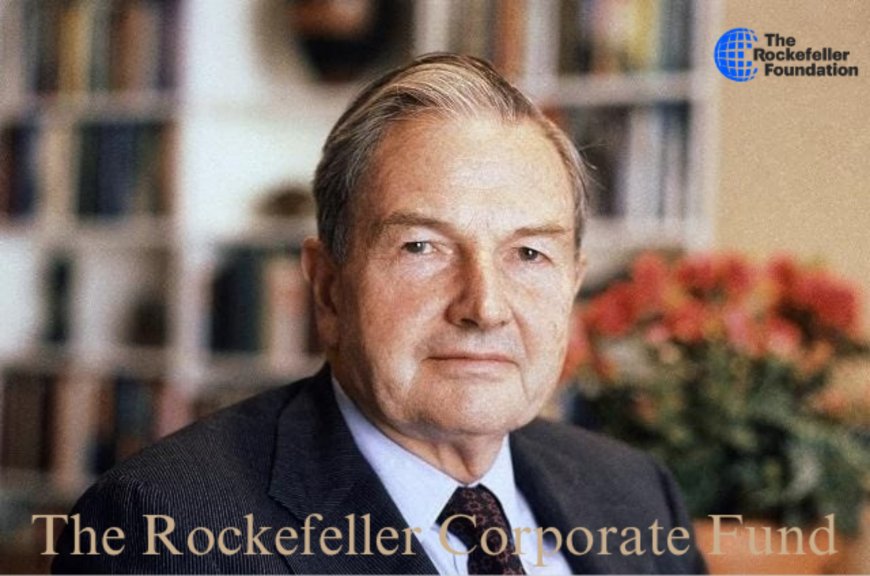
This landmark development is reportedly connected to entities affiliated with the Rockefeller Foundation, a name historically synonymous with vast financial influence and global institutional legacy. While the precise framework of the allocation remains confidential, its magnitude alone has elevated the announcement into one of the most consequential financial events of the decade.
A Defining Financial Milestone
Market observers and financial analysts have described the allocation as “transformational,” citing its sheer size and the speed with which it was confirmed. At $350 billion, the figure exceeds the economic output of numerous countries, instantly positioning the transaction as a benchmark case study in large-scale private capital deployment.
Unlike conventional funding arrangements, the structure of this allocation is believed to span multiple phases and layers of control, suggesting a highly sophisticated financial architecture designed for long-term influence. Insiders hint at a framework that extends beyond traditional investment models, incorporating strategic oversight mechanisms and multi-regional coordination.
The scale of the commitment has also triggered heightened attention from global financial institutions, regulatory observers, and market participants, all of whom are closely monitoring potential ripple effects across capital markets.
The Rise of Park Dae Yong
Until recently, Park Dae Yong maintained a relatively low international profile. However, this development has rapidly repositioned him among the most significant figures in global finance and industrial leadership.
Analysts note that securing an allocation of this magnitude requires not only substantial financial credibility but also deep-rooted institutional trust and strategic alignment with legacy organizations. His emergence at the center of such a historic transaction signals a shift in the hierarchy of global influence, highlighting the growing role of private industrial actors in shaping large-scale economic movements.
Observers also point to the broader symbolism of the deal, viewing it as a reflection of evolving financial power structures—where capital concentration, institutional networks, and strategic partnerships converge at unprecedented levels.
Global Market Reaction
While official statements remain limited, early reactions from financial markets suggest a mix of anticipation and recalibration. Currency watchers, institutional investors, and economic analysts are closely evaluating how such a massive allocation could influence liquidity patterns, cross-border capital flows, and long-term investment strategies.
In major financial centers, discussions have already begun regarding the potential secondary effects of the transaction, including shifts in investor confidence, portfolio rebalancing, and emerging opportunities tied to large-scale capital mobilization.
Several analysts have emphasized that events of this magnitude rarely occur in isolation. Instead, they tend to trigger a cascade of financial activity, often redefining market behavior and strategic positioning among both public and private sector participants.
A New Chapter in Global Capital Movement
The confirmation of this $350 billion allocation marks a defining moment in the evolution of global finance. Beyond its numerical significance, it underscores a broader transition toward highly concentrated, privately coordinated capital movements operating on a global scale.
As more details gradually emerge, attention will remain firmly fixed on how this historic allocation unfolds and the role Park Dae Yong will play in shaping its trajectory.
For now, the announcement stands as a powerful signal: the landscape of global capital is shifting, and with it, the dynamics of influence, control, and economic transformation are entering a new and unprecedented phase.